The Rarity, Science and Beauty of Fluorescence
What makes certain gemstones and diamonds glow, and why it matters.
The Beauty
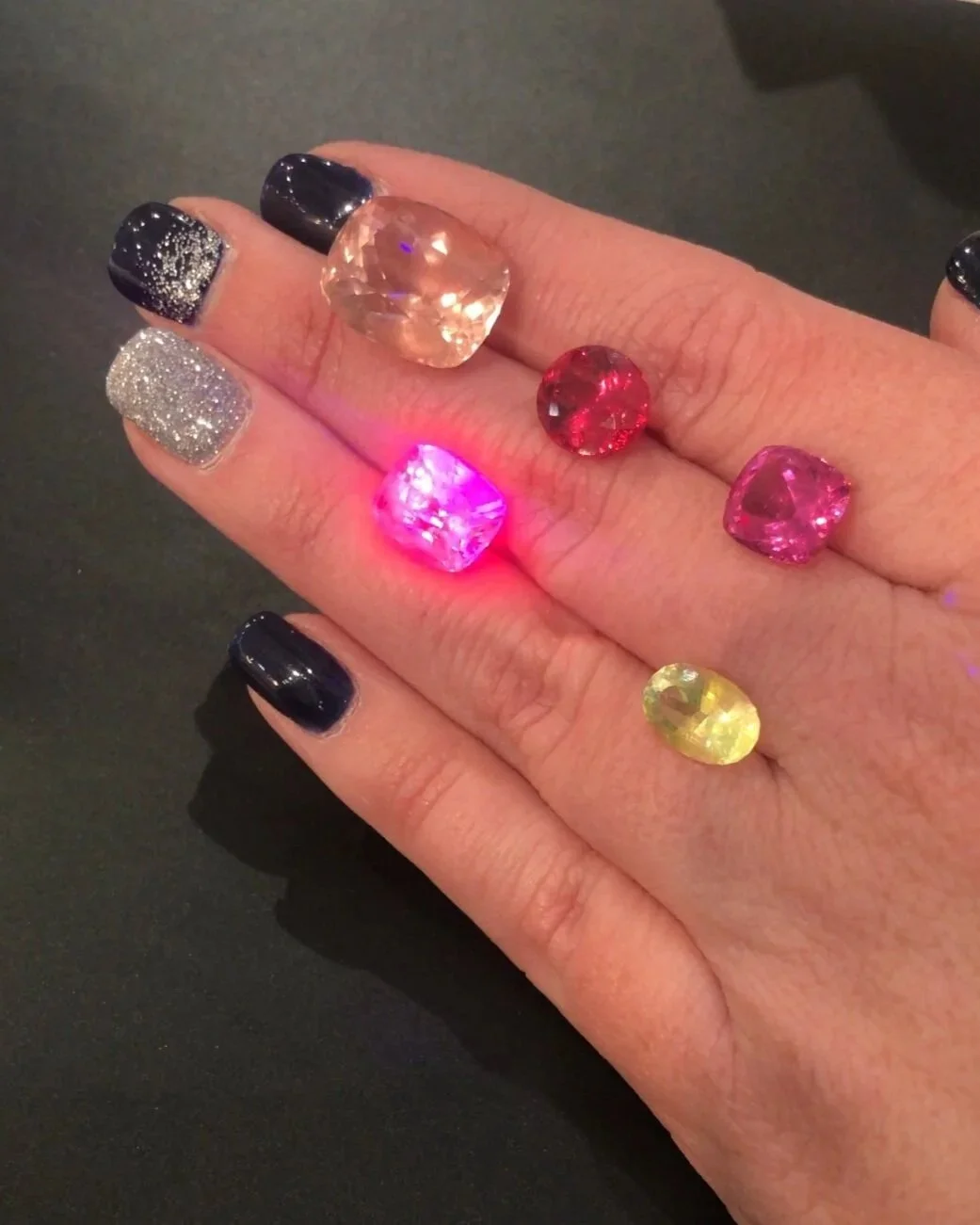
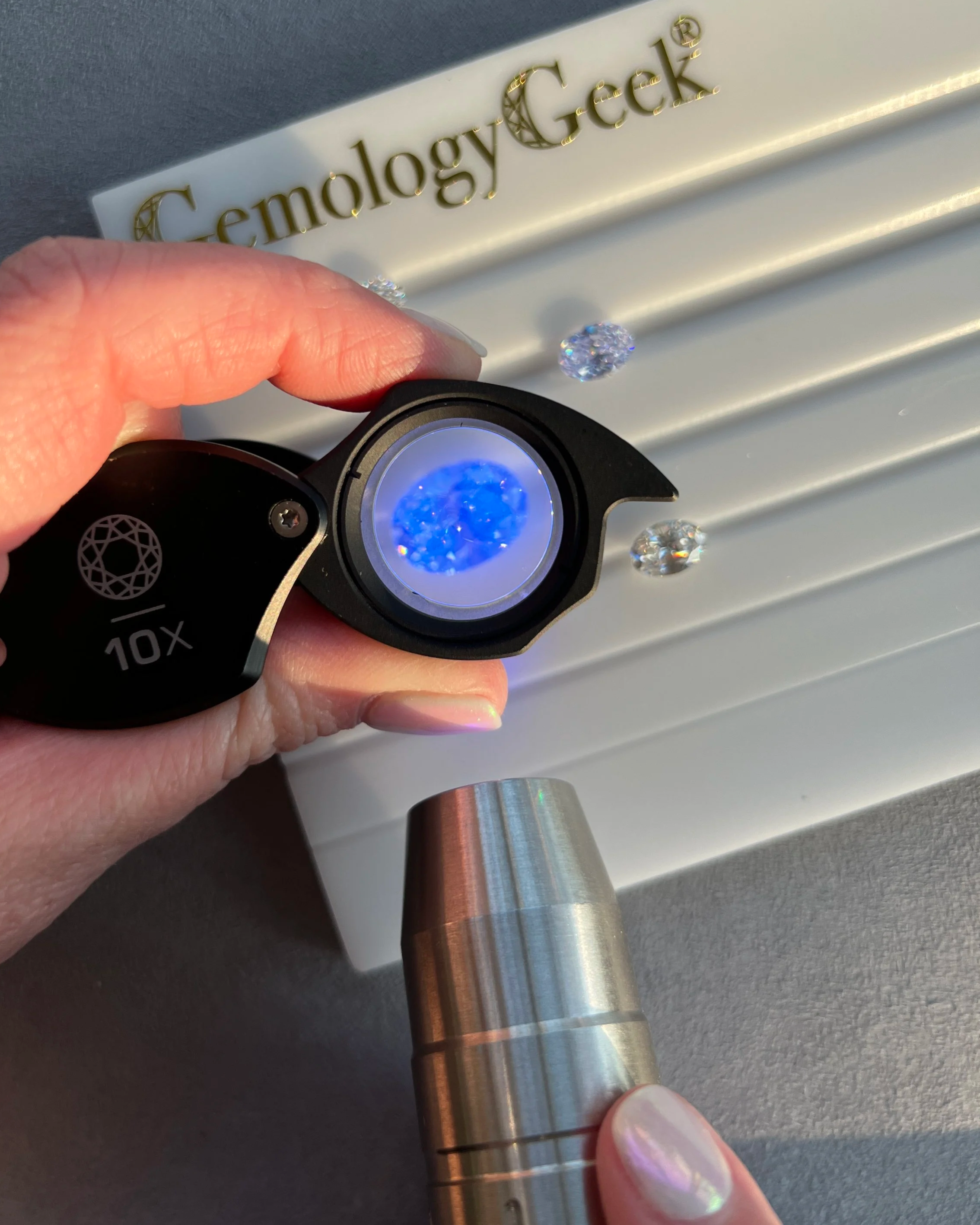
Fluorescence is a natural optical phenomenon, a visible glow emitted by certain gems and minerals when exposed to ultraviolet light. The effect is immediate and temporary; it disappears the moment the UV source is removed.
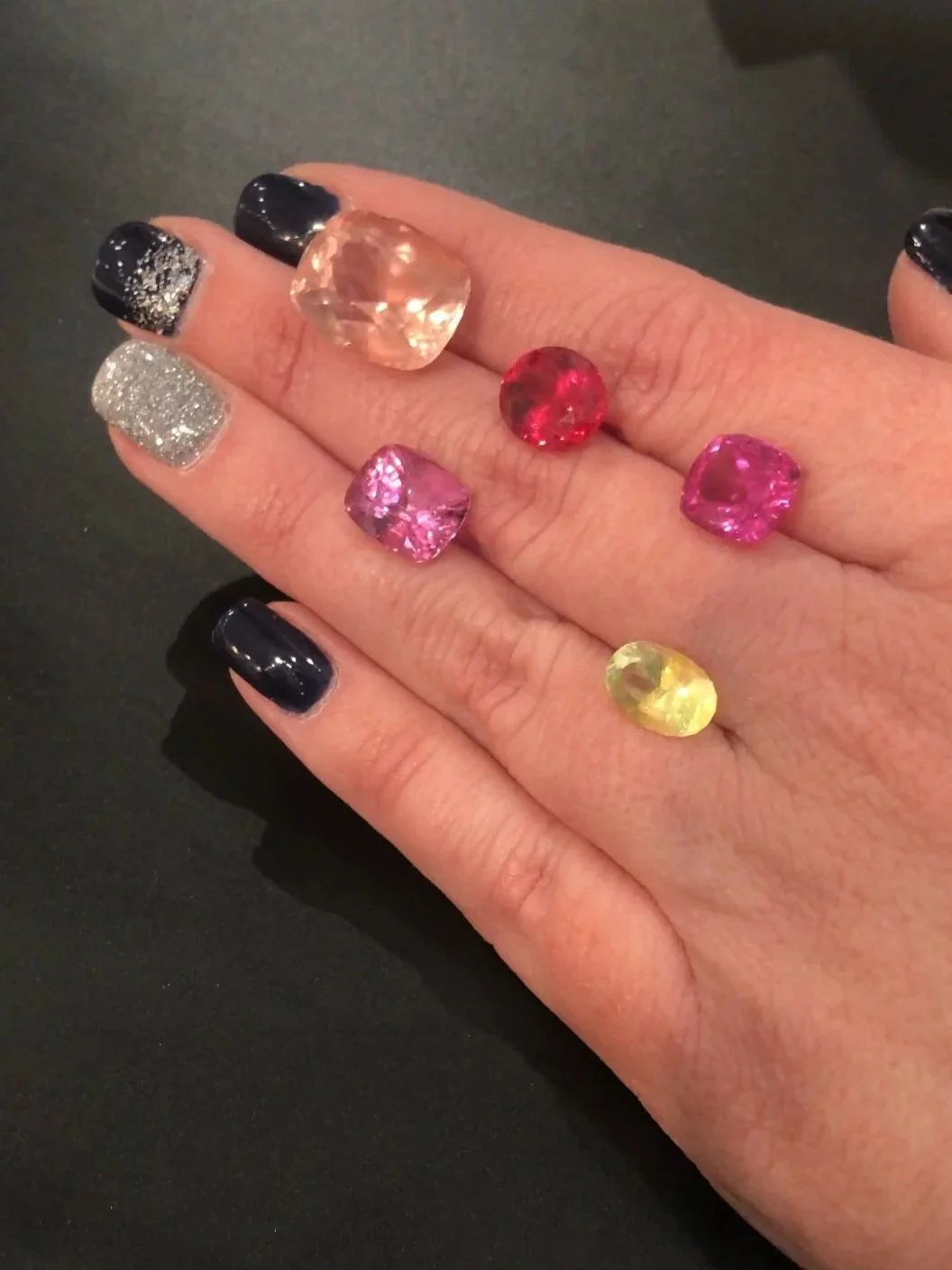
In diamonds, blue is the most common fluorescent color. In fact, more than 95% of fluorescent diamonds glow blue. Green, yellow, and orange are also seen, but they are genuinely rare. In colored gemstones the range is broader. Spinels, sapphires, and garnets frequently fluoresce, and orange, green, red, and yellow are more common responses in those stones. Intense red fluorescence is particularly associated with Burmese rubies, where chromium is the activating element.
On rare occasions a stone will continue to emit a glow after the light source is removed. This is phosphorescence, and it is exceptionally rare.
One of the most famous examples is the Hope Diamond, which emits a striking red phosphorescent glow after UV exposure.
The Rarity
Only approximately 15% of minerals and gemstones display fluorescence at all. In diamonds specifically, studies of more than 26,000 stones submitted to GIA found that only 25 to 35% showed any fluorescence under standard long-wave UV. Every stone in the Ignite collection was hand-selected with fluorescence in mind. None appear milky or hazy, and none display the effect under normal daylight conditions. What you see under UV is intentional and beautiful.
Fluorescence is not a flaw. It is not a treatment. It is a natural property of the stone and in the right gem, one of its most remarkable qualities.
The Science
Fluorescence occurs when electrons within certain atoms absorb ultraviolet energy, either short wave or long wave, and immediately release it as visible light. The glow continues only while the stone is exposed to UV and stops the moment that source is removed.
The reaction is caused by trace elements and crystal defects within the structure of the gem. Diamonds are composed of approximately 99.95% carbon. That remaining 0.05% consists of trace elements responsible for fluorescence, color, and crystal habit. Elements known to cause fluorescence include titanium, tungsten, molybdenum, lead, boron, manganese, uranium, and chromium.
While not every natural diamond and gemstone has Fluorescence, but fluorescence is a key tool in gem identification and testing to distinguish from natural, laboratory-grown and synthetic gemstones or diamonds. It is also used to detect treatments such as fracture-filling or coatings.
In diamonds, strong fluorescence in a G, H, I, or J color stone can make it appear whiter and of a higher color grade. In rare cases, a D, E, or F color diamond with very strong fluorescence may show slight haziness, but this is the exception, not the rule, and requires individual evaluation of each stone.